
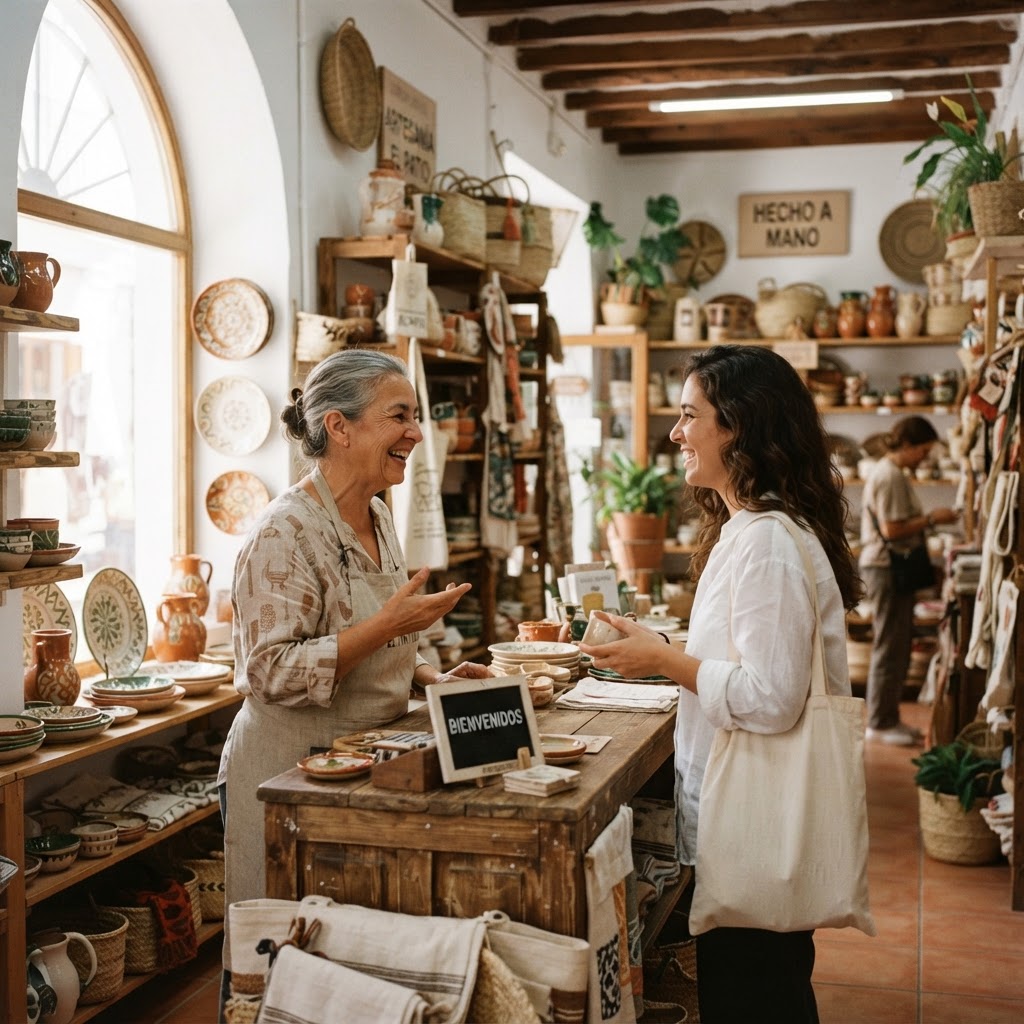
In an era saturated with polished ad campaigns, stock photography, and automated promotional pitches, consumers have developed a keen eye for authenticity. For small businesses, expats, and international entrepreneurs operating in Spain, competing on ad budget against corporate giants is rarely a winning strategy. What smaller businesses do possess, however, is something far more powerful: a genuine human story rooted in a specific place.
Generic marketing talks at people; local storytelling speaks with them. When a business shares the real narrative behind its products, its team, and its connection to the neighbourhood, it transforms from a faceless vendor into a trusted community partner.
Here is why hyper-local, human storytelling consistently outperforms cookie-cutter marketing—and how you can put it to work for your business.
Table of Contents
- The Problem with Generic Marketing
- Why People Buy from People, Not Logos
- The Anatomy of Authentic Local Storytelling
- Real-World Inspiration from Spain and Andalucía
- How Storytelling Improves SEO, Engagement, and Conversions
- Practical Steps to Tell Your Local Story
The Problem with Generic Marketing
Generic marketing relies on broad statements that could apply to almost any business in any corner of the globe. Phrases like "We offer high-quality services at competitive prices" or "Your satisfaction is our priority" carry little weight because every competitor says the exact same thing.
Why Standard Ads Fall Short
- Ad Fatigue: Modern consumers see thousands of commercial messages daily. Generic templates get filtered out automatically.
- Lack of Emotional Connection: Corporate jargon creates distance. It fails to trigger the emotional resonance that drives purchasing decisions.
- Zero Local Relevance: Standard campaigns miss the nuanced culture, local landmarks, and shared experiences of the community they operate in.
When you remove local context and human presence from your communications, your business becomes a commodity. And commodities are forced to compete strictly on price.
Why People Buy from People, Not Logos
At its core, trust is a relationship between human beings. When potential clients evaluate your business, they are not just assessing product specifications; they are gauging reliability, shared values, and character.
Generic Marketing → Transaction-focused → Low loyalty & high price sensitivity Local Storytelling → Relationship-focused → High trust & long-term retention
The Psychology of Trust in Local Markets
- Familiarity Breeds Confidence: Seeing the faces behind a business, understanding their background, and knowing why they chose to open in a specific town creates an immediate sense of safety.
- Shared Values: Customers love supporting businesses that actively contribute to their town's identity and community life.
- Authenticity Beats Perfection: Raw, behind-the-scenes glimpses or honest reflections resonate far more than overly produced corporate videos.
The Anatomy of Authentic Local Storytelling
Effective local storytelling does not require complex creative direction or big budgets. It simply requires clarity, honesty, and local grounding.
1. The Origin Story
Why did you open your doors here? Whether you are a local artisan preserving a craft or an expat entrepreneur launching a service in Costa del Sol or Seville, your journey matters to your audience.
2. The Local Context
Show your connection to the surrounding area. Highlight local suppliers, mention neighbourhood events, or discuss how the local lifestyle shapes the way you work.
3. The Human Element
Introduce your team, celebrate long-standing customers, and share daily moments. When prospective clients recognise the people behind the service, walking through your doors feels natural.
Real-World Inspiration from Spain and Andalucía
To see local storytelling in action, look at the vibrant small business ecosystem across Spain and Andalucía.
Case 1: The Boutique Olive Oil Producer in Jaén
Rather than publishing slick banner ads claiming "100% Premium Extra Virgin Olive Oil," a small producer in Jaén shares short video clips of the morning harvest, introduces the olive growers by name, and explains how weather shifts in the Sierra de Cazorla affect each yield. The result? Customers view the oil not merely as a pantry item, but as a piece of Andalusian heritage.
Case 2: An Expat-Run Specialty Bakery in Málaga
An international founder in Málaga shares the story of adapting traditional British sourdough techniques using flour milled locally in Andalucía. By documenting the trial-and-error process on social media and featuring local coffee roasters alongside their bread, the bakery built a loyal, cross-cultural customer base before even opening its physical doors.
How Storytelling Improves SEO, Engagement, and Conversions
Local storytelling is not just a branding exercise—it yields measurable digital marketing metrics.
1. Organic Search & Local SEO
When you create content centered around local events, regional suppliers, and community topics, you naturally incorporate location-based keywords. Google prioritises content that displays genuine Experience, Expertise, Authoritativeness, and Trustworthiness (E-E-A-T). Authentic local narratives tell search engines exactly where you operate and who you serve.
2. Higher Engagement on Social Channels
Social media algorithms favour content that inspires saves, shares, and genuine conversations. Photos of real team members and local stories consistently earn significantly higher organic engagement than polished promotional graphics.
3. Superior Conversion Rates
Trust directly reduces buyer hesitation. When a website visitor reads authentic client stories, views real photos of your workspace, and understands your values, they are far more likely to contact you or make a booking.
Practical Steps to Tell Your Local Story
Ready to shift from generic promotion to meaningful storytelling? Start with these actionable steps:
- Audit Your Current Content: Review your website and social profiles. If your company name were removed, could your copy belong to any business in the world? If yes, it is time to add local personality.
- Feature Real Faces: Replace stock imagery with high-quality photos of your team, your workspace, and your day-to-day operations.
- Highlight Local Partners: Collaborate with nearby businesses or suppliers and share how you work together.
- Answer Real Customer Questions: Write articles and posts addressing specific challenges your local audience experiences.
- Keep Your Business Profiles Updated: Ensure your Google Business Profile reflects your local narrative through regular updates, owner photos, and authentic client reviews.
Conclusion
Generic marketing makes noise, but authentic local storytelling creates connection. By sharing your genuine history, highlighting your team, and embracing your local community, you build a level of trust that generic ad campaigns simply cannot replicate. For small and medium-sized businesses in Spain, storytelling is not just a creative option—it is your single strongest competitive advantage.